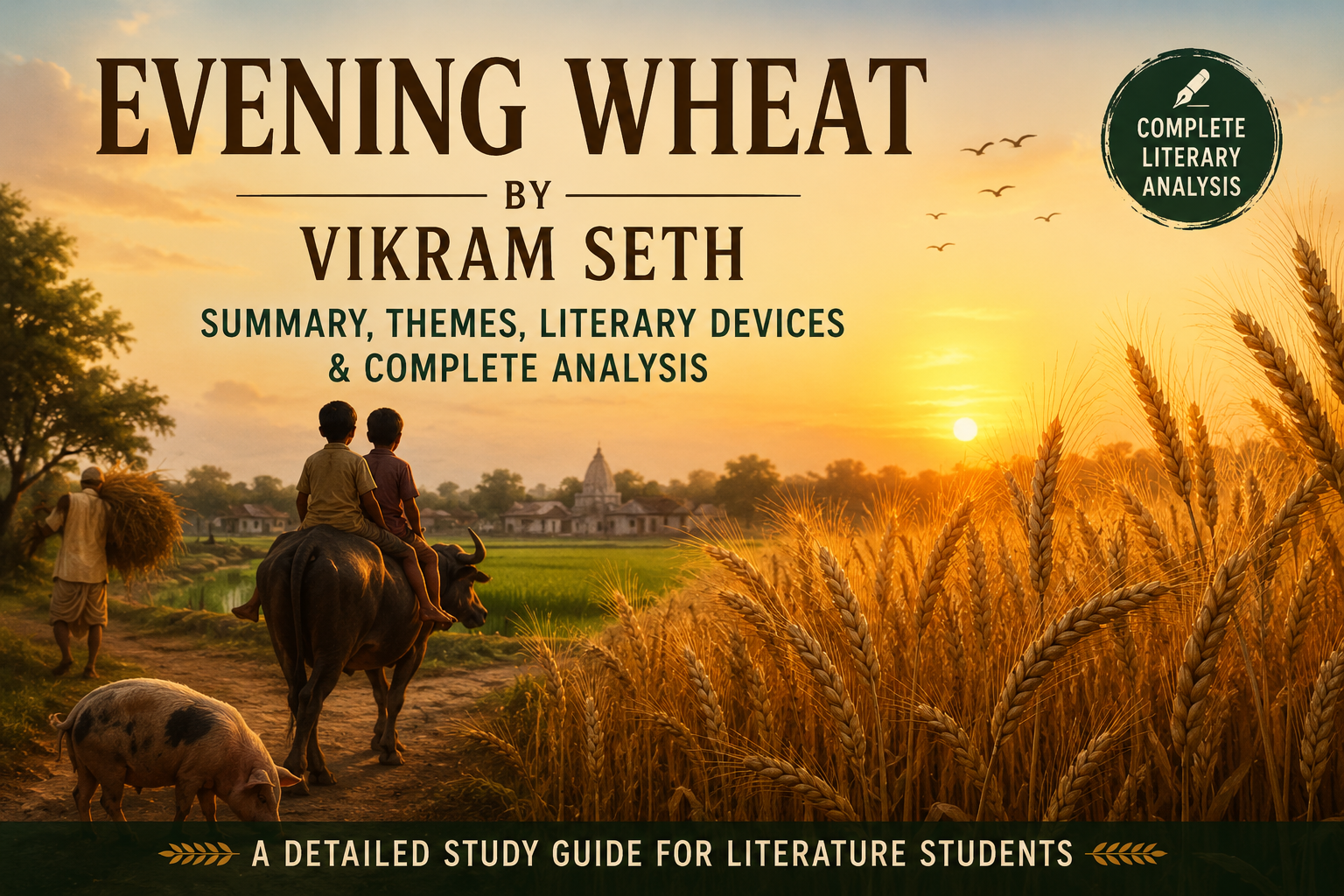
Evening Wheat by Vikram Seth is a beautifully crafted poem that captures the peaceful beauty of rural India during sunset. Through simple yet vivid language, Vikram Seth paints a picture of village life, golden wheat fields, and the harmony between nature and humans. The poem highlights everyday rural activities while celebrating the richness of agricultural life.
This poem is admired for its imagery, symbolism, and emotional depth. It also reflects Seth’s neo-formalist style, combining traditional poetic techniques with modern themes.
About Vikram Seth
Vikram Seth is one of India’s most celebrated contemporary writers. He is known for writing novels, poetry, travel writing, and translations.
Quick Facts
- Born: 20 June 1952
- Birthplace: Kolkata, India
- Occupation: Poet, Novelist, Travel Writer
- Language: English
- Writing Style: Neo-Formalism
- Famous Works:
- A Suitable Boy
- The Golden Gate
- An Equal Music
- Mappings
- The Humble Administrator’s Garden
His works beautifully combine Indian culture with Western literary techniques.
Summary of Evening Wheat
The poem describes a peaceful evening in a rural village when the wheat fields glow with a golden color under the setting sun. As evening approaches:
- Toads begin croaking.
- Children ride buffaloes back home.
- Farmers carry the last bundles of harvested wheat.
- Village squares slowly become active.
- Wheat fields appear like shining gold.
- Nearby rice fields remain bright green.
The poet carefully observes these everyday scenes, showing how ordinary moments can become extraordinary through close observation.
Towards the end of the poem, Seth notices a pig wandering into the wheat field, quietly eating soft wheat ears. This small detail makes the rural setting feel even more natural and realistic.
Major Themes in Evening Wheat
1. Beauty of Rural Life
The poem celebrates the calmness and simplicity of village life.
Key Points
- Peaceful evening atmosphere
- Traditional farming activities
- Harmony between humans and nature
- Natural beauty of agricultural fields
2. Nature’s Richness
Nature is presented as valuable and life-giving.
The golden wheat symbolizes:
- Prosperity
- Wealth
- Fertility
- Hope
3. Daily Village Life
The poem captures ordinary routines that define rural living.
Examples include:
- Children returning home
- Farmers finishing work
- Animals moving freely
- Evening sounds filling the countryside
4. Contrast Between Crops
Vikram Seth creates a visual contrast between two crops.
| Wheat | Rice |
|---|---|
| Golden | Emerald Green |
| Harvest Ready | Yet to be Transplanted |
| Symbol of Abundance | Symbol of New Growth |
This contrast makes the landscape more vivid.
Literary Devices Used in Evening Wheat
1. Imagery
The poem contains rich sensory imagery.
Examples include:
- Golden wheat fields
- Emerald rice
- Croaking toads
- Children riding buffaloes
These images help readers visualize the countryside.
2. Metaphor
The wheat is compared to gold.
Significance
- Represents wealth
- Symbolizes successful harvest
- Shows nature’s treasure
Example:
“Late gold”
3. Personification
The poet gives human qualities to wheat.
Example:
“The wheat sags with a late gold.”
This suggests the wheat is tired after a long day under the sun.
4. Alliteration
Repeated consonant sounds improve the poem’s musical quality.
Example:
- “Late gold”
The gentle sound creates a peaceful rhythm.
5. Contrast (Juxtaposition)
The poem contrasts:
- Green rice and golden wheat
- Day and evening
- Work and rest
These contrasts make the imagery stronger.
6. Symbolism
Several objects carry deeper meanings.
Wheat symbolizes:
- Prosperity
- Hard work
- Rural life
- Nature’s generosity
Evening symbolizes:
- Peace
- Completion
- Reflection
- Rest
Poetic Style
Vikram Seth belongs to the Neo-Formalist tradition.
His poetry often includes:
- Traditional rhyme
- Regular rhythm
- Simple vocabulary
- Elegant structure
- Natural storytelling
His style makes poetry enjoyable for both beginners and advanced readers.
Why Evening Wheat is Important
The poem remains popular because it reminds readers to appreciate ordinary moments.
Important Lessons
- Beauty exists in everyday life.
- Nature deserves admiration.
- Farming is essential to society.
- Simplicity can be deeply meaningful.
- Human life is closely connected to nature.
Key Features of Evening Wheat
- Simple yet powerful language
- Rich natural imagery
- Peaceful rural setting
- Strong visual descriptions
- Effective symbolism
- Excellent use of poetic devices
- Emotional depth
- Realistic village life
Exam-Oriented Points
Students should remember these important facts.
Poet
- Vikram Seth
Genre
- Nature Poetry
Setting
- Rural India during evening
Tone
- Calm
- Reflective
- Peaceful
Mood
- Serene
- Relaxing
- Nostalgic
Main Symbol
- Wheat = Prosperity
Main Literary Devices
- Imagery
- Metaphor
- Personification
- Alliteration
- Contrast
- Symbolism
Frequently Asked Questions (FAQs)
1. What is the central idea of Evening Wheat?
The poem celebrates the beauty of rural life, nature, and the peaceful atmosphere of an Indian village at sunset.
2. Why is wheat compared to gold?
The wheat symbolizes wealth, abundance, and the value of agriculture.
3. What type of poem is Evening Wheat?
It is a descriptive nature poem with strong imagery and symbolism.
4. Which literary device is most important in the poem?
Imagery is the most significant device because it creates vivid pictures of rural life.
5. What mood does the poem create?
The poem creates a peaceful, calm, and reflective mood.
6. What does the evening represent in the poem?
Evening represents rest, completion of daily work, and harmony between people and nature.
Conclusion
Evening Wheat by Vikram Seth is much more than a simple description of a village evening. It is a thoughtful celebration of nature, agriculture, and the quiet beauty of everyday life. Through vivid imagery, meaningful symbolism, and elegant poetic techniques, Seth transforms an ordinary rural scene into a timeless work of art. The poem reminds readers to appreciate the rhythms of nature and the value of simple, peaceful moments, making it an enduring favorite in Indian English literature.